
01
Know exactly why patients hesitate—and how to eliminate that hesitation
Without pressure, persuasion, or discounts.
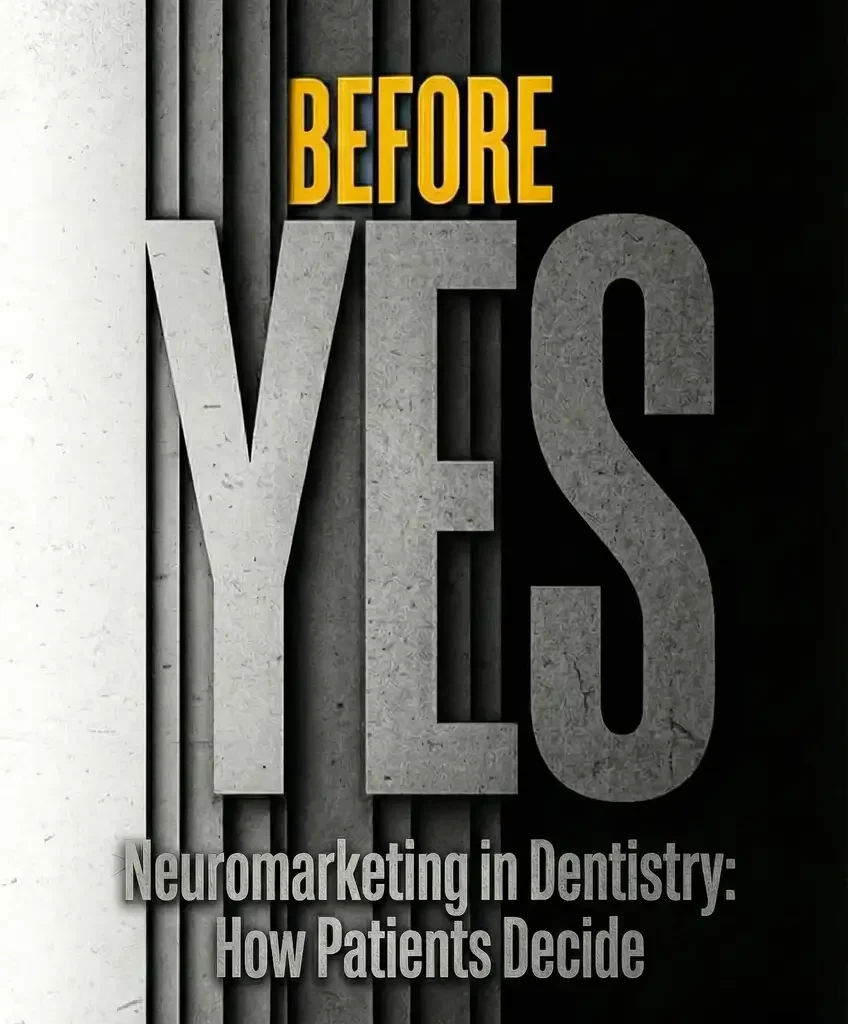
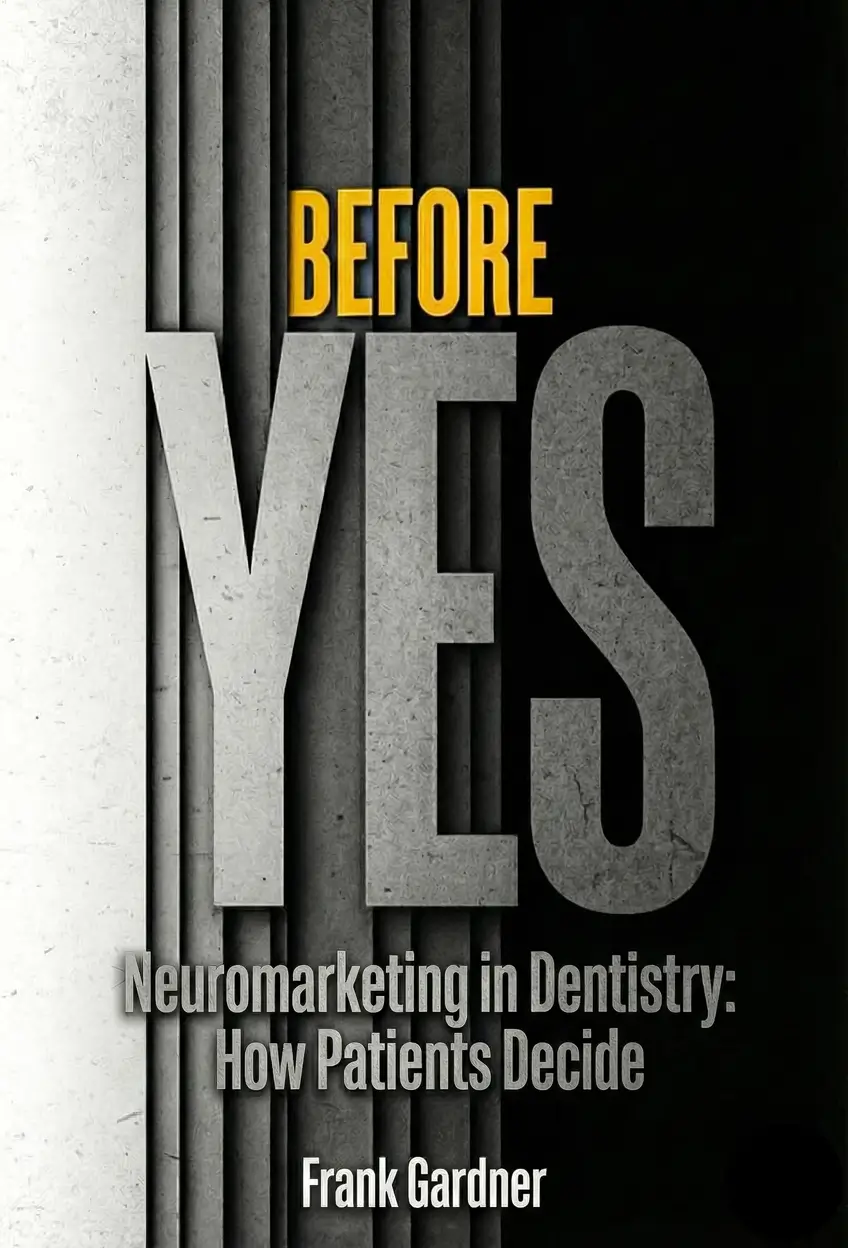
Neuromarketing in Dentistry:
How Patients Decide
Download & read the bookReview the Book. Then Decide
Chosen by 582 dentists
Not hesitation.
After every consultation.
Not recycled marketing tricks.
that generate attention but no real results.
and that neuromarketing is no longer optional — it is the future.
A discipline that, starting in 2027, will officially replace traditional marketing models.
and that nothing needs to change.
It’s never just price. It’s certainty.
that deliver zero measurable outcomes.
to seriously read a book that could transform your practice.
Without pressure, persuasion, or discounts.
By making the right choice feel obvious to the patient.
In consultations, pricing, team behavior, and marketing.
So your clinic performs consistently—even on hard days.
No more chasing tactics. Only what works.
Once you see it, you can’t unsee it.
Not by working harder—but by thinking differently.
It gives you a better way to decide.
And once your decisions improve, everything else follows.
They don’t compare procedures. They don’t evaluate technology. And they rarely decide based on logic alone.
Patients choose certainty.
No one wakes up wanting a crown, an implant, or veneers. They wake up wanting relief. Safety. Confidence. Control. A future version of themselves with less pain, less embarrassment, and less risk of regret. The treatment is not the desire—it’s only the vehicle.
Yet most clinics speak as if the procedure itself is the product.
Here’s the uncomfortable truth: clinical excellence is assumed.
Patients expect you to be competent. What they are unsure about is whether choosing you is emotionally safe.
From the very first interaction—often before the first appointment is booked—the patient’s nervous system is already at work. Their brain is scanning, subconsciously, for signals. Not credentials. Not equipment. Signals.
Tone of voice.
Calm or rush.
Clarity or confusion.
Confidence or hesitation.
Order or chaos.
These signals stack up instantly. And long before a patient hears your treatment plan, their brain has already labeled you as either safe or risky.
This is why two clinics with similar skills, similar prices, and similar services get wildly different results. One converts effortlessly. The other hears “I need to think about it.” The difference is not persuasion—it’s how early and how clearly certainty is established.
This is the foundation of the NeuroTrust Framework™:
People do not move forward when they understand more.
They move forward when fear drops below desire.
Most consultations fail not because patients lack information, but because uncertainty remains unresolved. That uncertainty may be loud or subtle, but it’s always present when patients delay.
Over-explaining increases it.
Too many options amplify it.
Rushing triggers it.
Silence at the wrong moment activates it.
The patient may not consciously notice any of this—but their nervous system does.
When uncertainty feels safer than action, the patient delays.
And delay is not indecision. It’s self-protection.
This is why patients say, “Let me think about it.”
What they actually mean is, “I don’t feel safe enough to decide yet.”
High-performing clinics do not try to convince patients out of fear. They don’t argue. They don’t pressure. They don’t discount.
They engineer certainty.
They guide the patient through a precise internal sequence:
First, the patient feels understood.
Then, they feel safe.
Then, they gain clarity.
Then, they feel in control.
Only then do they commit.
Notice what’s missing from that sequence—logic battles, price justification, or persuasion tactics.
The most common mistake dentists make is trying to sell the procedure while fear is still active. They speak to logic while the brain is still defensive. And logic never wins against fear.
The solution is not better explanations.
The solution is better sequencing.
You don’t introduce details until trust is steady.
You don’t discuss price until safety is established.
You don’t ask for commitment until the patient feels internally aligned.
Patients don’t choose the best dentist.
They choose the option that feels like the lowest-risk version of their future self.
And that is the real competition.
Not other clinics.
But the patient’s fear of regret.
_________________________________________________
The brain decides emotionally before it agrees logically.
If fear is active, logic stays offline.
Certainty is more powerful than persuasion.
The absence of doubt closes more cases than any explanation ever will.
Over-explaining increases perceived risk.
Clarity reduces fear. Complexity magnifies it.
Patients don’t reject treatment—they escape uncertainty.
Every delay is a signal that safety was not fully established.
Patients commit when moving forward feels safer than waiting.
Your job is not to push them—it’s to design that moment.